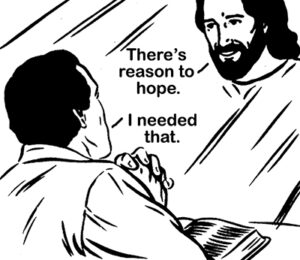
 Reason to hope. Those words exploded within me today during prayer time. Dark forces have been intensely assaulting me for a few days. So those words meant so much; they carried much meaning to me at this particular time.
In my Christian life, I have on a few occasions experienced something like this, but rarely this strongly. I hesitate to tell you the specifics and details, but I was almost knocked out by it. Satan condemns. Satan has no mercy. “The judgments of the Lord are true and righteous altogether” (Psalms 19:9). But that is utterly untrue of Satan’s judgments.
Your heart gets hit, your mind gets hit, you wonder if you were ever right about anything. You evidently have been a complete hypocrite and utterly deceived all your life. It can be a real onslaught and, sadly, the devil can tell you a lot of truth about yourself, not to mention all the lies he tells you. He knows your weaknesses; he knows the weaknesses you yourself even know about.
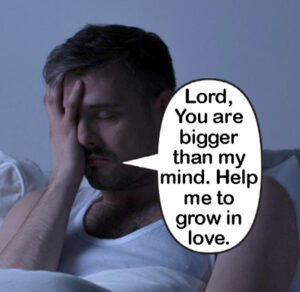 So why did “There’s reason to hope” hit me so strongly this morning? As I have written before, I know that I am sort of a mentalist and have been that way all my life. I have known how much I have needed to grow in the realm of the things of the heart: joy, love, mercy—the whole basket of things that the Lord can provide. There are some people who almost seem to naturally be more that way than others. But some tend to be cold, calculating, cruel, analytical mentalists. Still, the Lord loves those folks and can actually step in and make a real difference in their lives.
So when I heard “There’s reason to hope” this morning, my attention was immediately drawn to the strong fundamental difference between those two words. “Reason” is mostly associated with things of the mind. “The Age of Reason” in the 1700s came to be a movement that was seen to have eclipsed and subdued “religion,” or in actuality, faith in God. It diminished and demeaned God and the things of the spiritual world.
But the reality is that reason doesn’t have to do that at all. The Bible talks about “the reason of the hope within us” (I Peter 3:15). God said in Isaiah, “Come, let us reason together, saith the Lord…” (Isaiah 1:18). So what then is the reason there is to hope? It’s Jesus. All my atheist, secular friends can now scream and freak out, but getting down to reality: the reason there is to hope is Jesus.
Jesus was an utterly real person. But he was prophesied of in multitudes of places in the Old Testament. Where he would be born, that his mother would be a virgin, how he would die, that he would be raised from the dead—all of that had been foretold, and then it happened.
But what does that mean to any of us today? I’ll tell you what it has meant to me. I was able to “receive the Lord.” That means that I invited Jesus to come and live in my heart—and not only to live there but to change it with his power. Because I really, really needed to have my heart changed. Is he finished with me? Nope, there’s still plenty that needs to be done on my heart, and he’s working on it.
Sadly, I’ve been in contact with someone recently who evidently is really not allowing or wanting Jesus to live and work in their heart. So there are so many things there in that heart that are opposite to the warm, sincere, loving, clear, merciful, stable heart and mind that Jesus can make and sustain in every one of us. So many people almost pride themselves on how “reasonable” they are. But they reject Jesus, who actually is the only antidote to the poisons, venoms, and toxic fumes that so often come to be produced and emitted by hearts that don’t have Jesus in them.
 Talk about “environmental pollution”! Pause and think for a moment about how much pollution is released into the atmosphere of our lives by the godless, truthless, perverted, warped hearts of those who don’t have the love of God in their hearts! They sadly spew out venom, vanity, toxic initiatives, and meaningless blather that circles the globe and enters the hearts and souls of every person on earth!
“There’s reason to hope.” Reason to me is sort of like an attribute of our minds. However, sometimes “reason” can seem to make “hope” appear “unreasonable.” But that’s not true. In Jesus, what can seem hopeless is not. All the things that seem unattainable in our lives—true peace, love for others, a gentle, kind heart, deep abiding freedom—these are all reasonable and attainable through the utterly reasonable hope we have in the crucifixion and resurrection of Jesus.
That’s what happened to me. He came into my heart and has been living there and doing construction work now for over 50 years. He knows my weaknesses, and if it wasn’t for his continuing mercy on me, as well as his continuing faith in me, I’d have been a dead duck long ago.
Don’t let the devil condemn you. Don’t stand at the judgment seat of Satan. Appeal to the “Supreme Court,” the King of kings, the righteous judge who loved us and gave himself for us. Friends, there’s reason to hope. That’s what the Lord told me this morning.

 Bonded labor in that form no longer exists here in the United States, as far as I know. But severe poverty, often driven by heartless mercantilism, has been a reality for people throughout history. John Steinbeck’s The Grapes of Wrath, written in 1939, was a blistering critique of the conditions farm workers faced in California at the time—working for 25 cents a day, barely staying ahead of starvation.
 So, what can I do? What do I plan to do? First, I can write this and share it with you, my friends. I can ask for your prayers—not only for me, but especially for this exploited man and his young family. You don’t need to know his name or his country to lift him in prayer.
 But I can still help this man and his family. I’m sure not rich but I do have enough to try at least to buy this man out of utter literal slavery and into some form of labor that will lift them up to a more endurable daily existence.
 But I’m convinced there’s often more going on than what we see. King David wrote to God, “
 I believe He can do the same with people. Scripture is full of stories of those who were spiritually—and sometimes even physically—dead, yet returned to life through God’s mercy. The prodigal son was, for all intents and purposes, dead to the life he once had. But when “
 Britain is a vivid example. In some places, local councils have gone so far as to order police to stop people from flying the Union Jack, Britain’s flag, on their own property! Meanwhile, others are arrested merely for standing silently across the street from abortion clinics. Such measures show just how far things have gone astray.
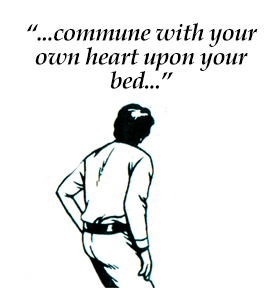 But the real kicker came later this morning, after my daily devotion time, when I went out for a little prayer. A verse came to mind, “
 And then there was more. When I went back inside to add that verse to my memory system, my eyes landed directly on Psalm 4:4—already written on one of my memory cards. I had evidently memorized it some time ago. But today, the Lord led me to look directly on it as I was going through my memory system, bringing it back a second time in such a personal, unmistakable way.
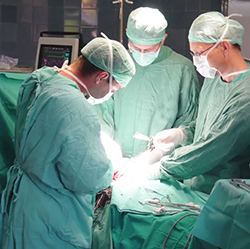 They say, “the greater the darkness, the greater the light” and that’s how Christmas is to me right now. Medically for me this year, there was lower back surgery in February, several months of dental work and then “full reverse shoulder replacement” in August. And I am so very thankful and amazed to be able to say that those all worked out extremely well, with utterly competent doctors and dentists so that I’m now feeling better than I have in years. I really do have a lot to be thankful for.
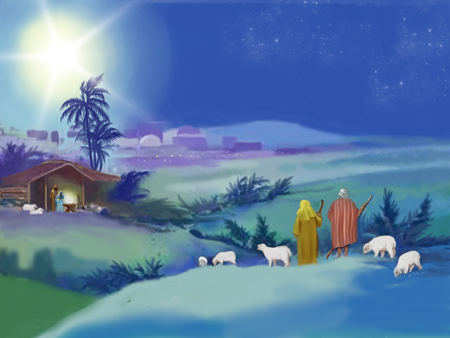 So, thank God for Christmas. Thank God for a “holiday season”, as it is called now, in which nations hearken back to the birth in Bethlehem 2000 years ago of the most unique Man in history, prophesied to come, born of a virgin, despised by His own people, willingly crucified and raised by God the Father on the third day. CNN will probably not be running a special on this and in some places in the West it’s nearly become illegal to even mention it or openly celebrate it.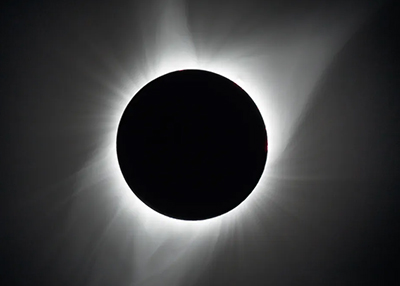
 since
since  But eclipses don’t last forever. Mine didn’t. Perhaps a secret for me was that I knew God and His son Jesus. And They are able to deliver us from the lowest hell. It was that faith, that God was bigger than my circumstances, that gave me the grace to just hold on and keep praying through a time like I’d never gone through before.
 “So, Mark, are you religious? Do you think that religion will solve the problems of the world today?”
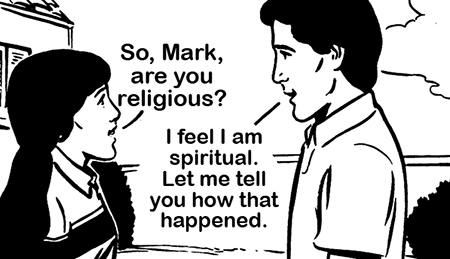 I can see how that question asked by someone else, seeking to understand me better and what I stand for, might have said the same thing. In that case, it would be easy to hear the sincerity in their voice and in that situation I would have answered completely differently.
 New and stranger goings on proceed briskly in the secular nation of Israel in the Middle East. Will the new, ultra religious government there clear the way for the building of the Third Temple in Jerusalem? And artificial intelligence meanwhile is gathering pace by leaps and bounds; some now predict that “
 And the latest fear is that China will come to the aid of Russia with an infinity of weaponry, matching what the West is giving Ukraine. My, how that would be an unfathomably ominous turn of events in this saga. Would that not bring us face to face with the full scenario of World War III that was so before us at the height of the Cold War?